

A Digital Platform for the Whitegoods Trade and Its Members
A website designed to help appliance repair professionals, businesses and the public find useful information about the Whitegoods Trade Association. The Whitegoods Trade Association website was developed to present membership information, industry resources, repair guidance and association details in one place, making it easier for visitors to understand the services and support available.The website is divided into clear sections, allowing trade members and public visitors to find the information relevant to them. Visitors can explore membership details, learn about the association, access industry information, read repair guidance, view news and events, and learn more about the Code of Practice.We also made sure that finding the right information and getting in touch is straightforward. Contact and membership enquiry options are available through the website, giving visitors an easy way to ask questions, learn more about membership or connect with the association.

Executive Summary
Whitegoods Trade Association is a website created to provide appliance repair professionals, businesses and the public with useful information about the association and its work. It brings together membership details, industry information, repair guidance, news, events and other useful resources in one place. The website helps visitors understand the role of the association, learn about membership and find information relevant to their needs. Each section has been arranged so that trade members and public visitors can easily find the information they are looking for. Clear content and straightforward navigation make it easier to explore the website, while contact and membership enquiry options give visitors a simple way to get in touch when they need more information.
Business Background
People looking for appliance repair information often need to check different types of information before deciding what to do. Trade members also need easy access to membership details, industry updates and other useful resources related to their work.The Whitegoods Trade Association website was created to bring this information together in one place. It provides details about the association, membership, industry topics, repair guidance, news and events, so visitors can find the information they need more easily. The website also provides useful guidance for the public while giving trade professionals access to relevant membership and industry information.
Business Goals
The website needed to work for both trade professionals and members of the public, with each group looking for different types of information. The main goal was to bring the important association, membership and repair-related information together in a clear and organised way. The website also needed to make regular updates such as news and events easy for visitors to find.
The main goals of the website were to:
- Make information about the association easy to find and understand.
Clearly present membership information and benefits.
Provide useful repair guidance for the public.
Give trade professionals access to relevant industry information.
Organise news, events and resources in a clear way.
Make it easy for visitors to find the information they need.
Provide simple ways for visitors to make enquiries and get in touch.
Create a website structure that can be updated with new content.
Keep the overall website simple and easy to navigate.
Challenges
The main challenge was to build a Joomla-based website that could present a large amount of association, membership and industry-related information without making the pages difficult to understand or navigate. The website needed to serve both trade professionals and members of the public, so the content had to be organised clearly for different types of visitors.
A few areas needed particular attention during the project:
- Organising association information: Membership details, association information, industry topics, repair guidance and other resources needed to be arranged into clear sections so visitors could find the information they needed.
- Serving different audiences: Trade professionals and public visitors have different requirements, so the website needed to provide relevant information for both groups without making the overall structure confusing.
- Presenting repair guidance: Repair-related information needed to be displayed in a simple and readable way so public visitors could understand the available guidance and options.
- Building within Joomla: The website needed to be developed within Joomla while keeping the content organised and manageable through the administration area.
- Keeping navigation simple: With several sections such as For Trade, For Public, News, Events and Membership, visitors needed a straightforward way to move around the website.
- Managing news and events: News and event content can change regularly, so the website needed a structure that made these updates easy to add and maintain.
- Responsive layouts: Content, images and page sections needed to remain clear and usable across desktop, tablet and mobile screens.
- Keeping the site manageable: The Joomla setup needed to allow association information, articles, news, events and other resources to be updated without requiring the website structure to be rebuilt each time.
Research
Before starting the development, we looked at the information the Whitegoods Trade Association needed to provide to its visitors and how different users would use the website. The main focus was on understanding the needs of trade professionals and public visitors, while keeping the content easy to find and understand.We reviewed the existing information, including membership details, industry information, repair guidance, news, events and general association content. This helped us understand how the information should be grouped and which sections needed to be easy to access from the main navigation.The research also helped us plan a simple page structure that could support different types of content without making the website difficult to browse. We considered how visitors would move between sections, find relevant information and contact the association when needed.
Key areas considered during the research:
- Visitor needs: Understanding what trade professionals and public visitors would expect from the website.
Content structure: Reviewing how membership, industry, repair and association information should be grouped.
Navigation: Planning clear navigation so visitors could reach important sections easily.
Information access: Making useful resources and guidance easy to find without unnecessary steps.
News and events: Considering how regularly updated content could be presented clearly.
Contact options: Making sure visitors could easily find ways to contact the association or make an enquiry.
Planning
Once the research was completed, we planned the website structure and how the main sections would work together. The aim was to create a clear and practical layout that would make it easy for both trade professionals and public visitors to find the information they needed.The planning focused on organising the content into clear sections and creating a simple navigation structure. We also considered how different types of information, such as membership details, repair guidance, news and events, would be presented across the website.
The main areas planned during this stage included:
- Website structure: Organising the main pages and sections in a logical order.
Navigation: Planning a simple menu structure for quick access to important information.
Content organisation: Deciding where membership, industry, repair and association information should be placed.
Page layouts: Planning layouts that could accommodate different types of content while remaining easy to read.
Responsive design: Considering how the website would work across desktop, tablet and mobile screens.
Content management: Planning a structure that would make future updates to news, events and other information easier to manage.
UI/UX Strategy
The website was planned to make the information easy to understand and simple to find for both trade professionals and public visitors. We kept the design clean and used clear sections so visitors could easily explore information about the association, membership, repair guidance and industry topics.The navigation was kept straightforward, allowing visitors to move between trade information, public guidance, membership, news and events without having to go through too many steps. The page layouts were also made responsive so the website remains easy to use on desktop, tablet and mobile devices.
- Clean and simple page layouts
- Clear association and membership information
- Simple and easy-to-follow navigation
- Separate sections for trade and public visitors
- Easy-to-read repair and industry information
- Clearly organised news and events
- Responsive design for different screen sizes
- Simple contact and enquiry options
Development
The website was developed in Joomla with a focus on keeping the structure simple and easy to manage. The pages were organised around the needs of trade professionals and public visitors, making important information easier to find.The development also focused on clear navigation, consistent layouts and responsive design so the website could be used comfortably across different screen sizes. Content such as articles, news and events can also be managed through the Joomla backend.
- Joomla development – Built the website using Joomla as the CMS.
- Page development – Created organised pages for trade, public, membership, news and other information.
- Navigation setup – Connected the main sections through a clear menu structure.
- Responsive development – Adapted the website for desktop, tablet and mobile screens.
- Content management – Made website content easier to update through the Joomla backend.
- Consistent layouts – Kept the page structure and design consistent throughout the website.
- Contact and enquiry areas – Provided clear options for visitors to get in touch.
Architecture
The website was organised around the different types of information visitors need to access. Association details, membership, trade information, public guidance, news and events were arranged into clear sections, making the site easier to navigate. Joomla was used to keep the structure organised and make future content updates easier to manage.
SEO Strategy
The website was structured with SEO in mind, making important association, membership, repair and industry information easier for search engines to understand. Clear headings, organised content and relevant page structures were used throughout the website, while Joomla helped keep the content organised for future updates.
Performance Optimization
The website was developed with a focus on keeping pages responsive and easy to use. Images, content and page elements were arranged carefully to keep the pages from becoming unnecessarily heavy. The Joomla setup also keeps the website content organised, making it easier to manage and maintain as new content is added.
Security
The website was developed with basic security considerations in mind to help protect the Joomla website and its content. The Joomla setup keeps administrative access separate from the public website, while keeping the system and website content organised for easier maintenance and updates.
Scalability
The website was structured to support future content and updates as the Whitegoods Trade Association continues to grow. The Joomla setup makes it possible to add new articles, news, events and other information without changing the main website structure. This gives the association room to keep adding useful content over time while keeping the existing pages organised. New sections or information can also be added as the website requirements change, without affecting the overall navigation and layout.
Business Impact
The website provides the Whitegoods Trade Association with a clearer way to present its information to both trade professionals and public visitors. By bringing membership details, repair guidance, industry information, news and events into one place, the website makes it easier for visitors to find the information they need. The organised structure also gives the association a practical platform for sharing new information and keeping its online content up to date.
View More Joomla Projects:
Project 1 → | Project 2 → | Project 3 →
Project Gallery
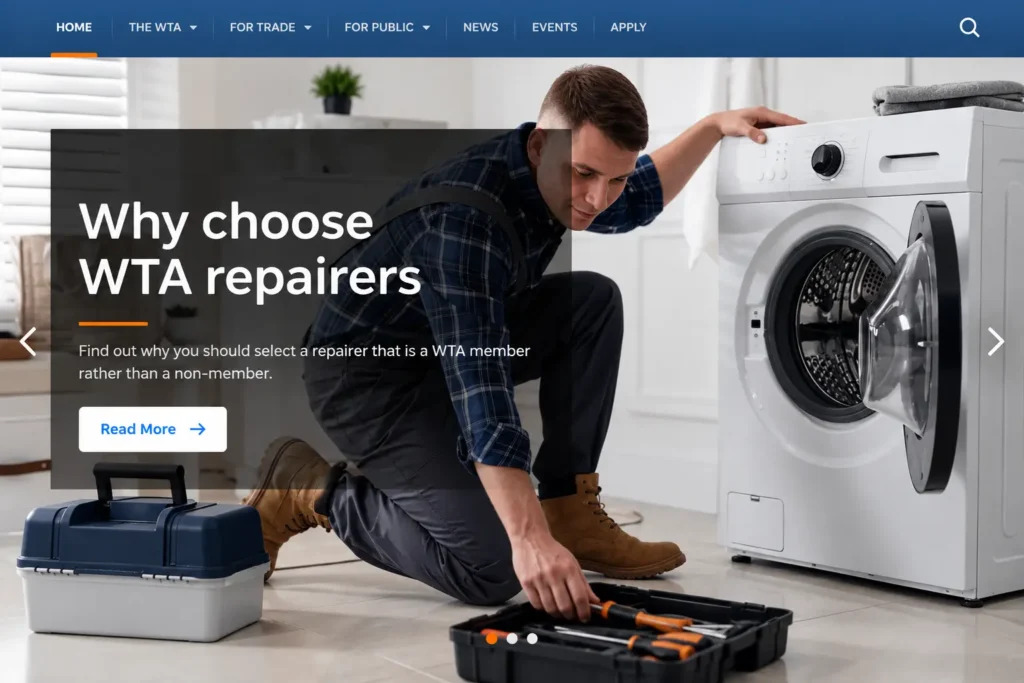
Screenshots and deliverables from the project.

Frequently Asked Questions
What type of website did Prime Core IT Services develop for WTA?
Prime Core IT Services developed a Joomla-based website for the Whitegoods Trade Association, bringing its association, membership, trade, public and industry-related information together in one organised platform.
What was the main goal of the WTA website?
The main goal was to create a clear and easy-to-use website where trade professionals and public visitors could quickly find relevant information, guidance, news, events and membership details.
Which technology was used to develop the website?
The website was developed using Joomla, allowing the content and different website sections to be managed through the Joomla backend.
How did Prime Core IT Services approach the website design?
The website was designed with simple layouts, clear navigation and organised content to make the information easy to understand for different types of visitors.
Was the WTA website made responsive?
Yes. The website was structured to provide a comfortable browsing experience across desktop, tablet and mobile screen sizes.
Can the WTA team update the website content?
Yes. The Joomla setup allows website content such as articles, news, events and other information to be updated and managed through the backend.
What did Prime Core IT Services focus on during development?
The development focused on clear content organisation, straightforward navigation, responsive layouts and making the website practical for both trade professionals and public visitors.
Can the website support future content and updates?
Yes. The website structure allows new articles, events, news and other information to be added as the association’s content requirements change.